

Repair vs Sell Fire Damaged House in Arizona: What’s Actually Better for You?
Should you repair vs sell a fire damaged house in Arizona? The right choice depends on how severe the damage is, what your insurance will actually cover, and how quickly you need to move on. In many Phoenix-area fire cases, the real decision is whether to invest months in repairs for a higher sale price or sell as-is for a faster, simpler exit.
Before you decide, here’s a quick snapshot of your options:
- Damage level: Structural vs. cosmetic, smoke and water spread, and safety issues.
- Money & insurance: Estimated repair costs, your coverage limits, and out-of-pocket risk.
- Timeline: Can you wait three to nine or more months, or do you need to close in a few weeks?
- Market reality: Repairing to reach top market value vs. selling as-is at a discount.
- Stress & logistics: Your bandwidth to manage contractors, permits, and inspections.
Repair vs sell fire damaged house is the critical decision every Arizona homeowner faces after a devastating fire. The path you choose depends on three key factors: the extent of the damage, your financial situation, and how quickly you need to move forward.
A house fire is one of the most devastating challenges a homeowner can face. Beyond the emotional toll, you’re thrust into a complex decision about your property’s future. Fire damage repairs can range from $3,107 to over $51,000, and the process can take six to twelve months to complete, adding significant stress to an already difficult time.
The good news is that you have options. Some homeowners repair their property to maximize its sale price, while others sell fire-damaged homes instead of repairing them to avoid the stress and cost of a lengthy renovation. In Arizona’s real estate market, both paths for how to repair vs sell fire damaged house can be successful, but it’s crucial to understand the trade-offs before you decide.
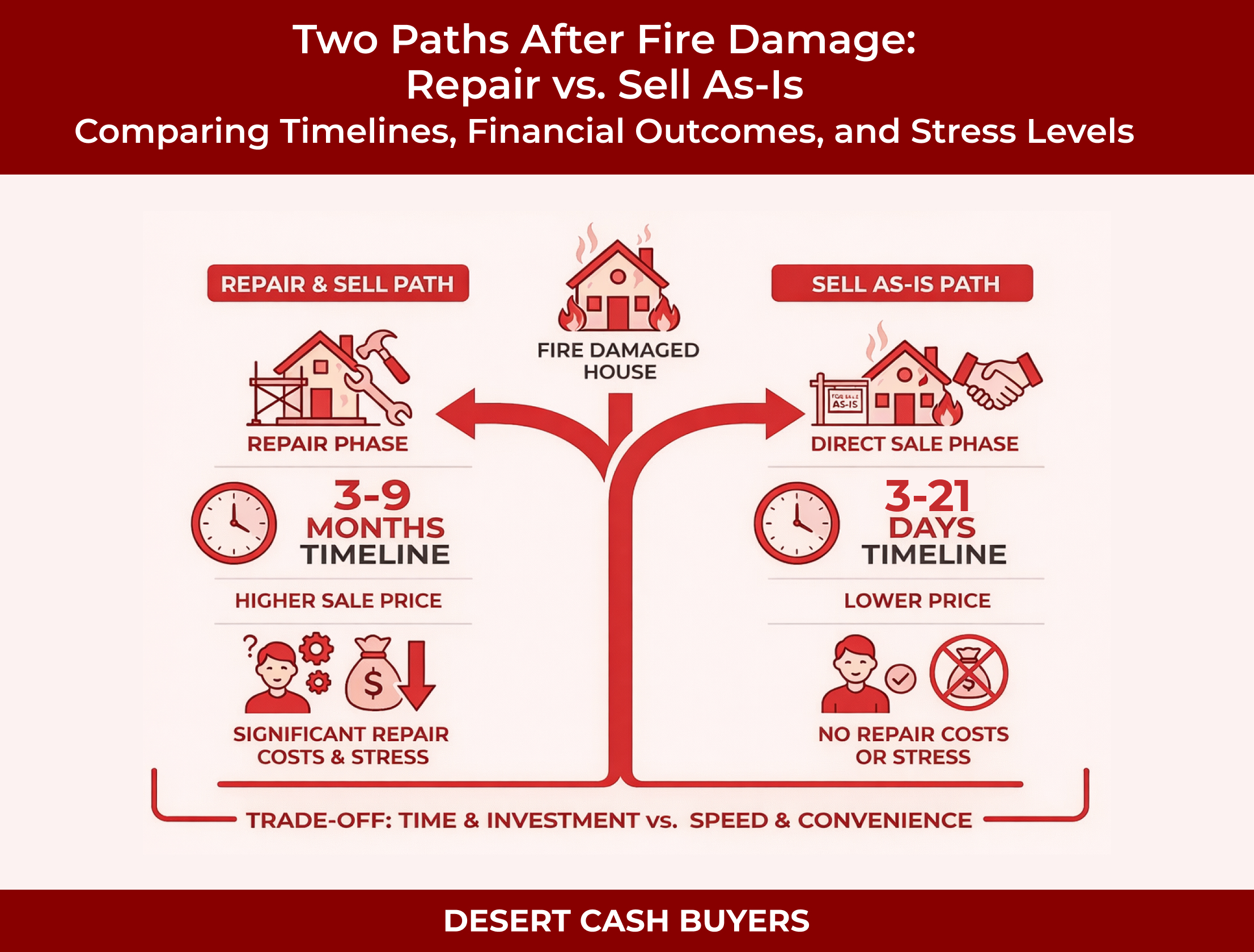
The Core Decision: A Head-to-Head Comparison of Repair vs. Sell Fire Damaged House
The decision to repair or sell a fire-damaged house is pivotal, shaping your financial and emotional recovery. For homeowners in Phoenix, Scottsdale, and across the valley, it’s about finding peace of mind. Let’s compare the two main paths: repairing before you sell versus selling your home as-is.
Here’s a quick look at how these options stack up:
| Factor | Repairing Before Selling | Selling As-Is |
|---|---|---|
| Potential Sale Price | Higher, closer to pre-fire market value | Lower, discounted for damage and investor profit margin |
| Upfront Costs & Effort | High (repairs, permits, contractor management) | Low (no repairs, no showings, no commissions) |
| Sale Timeline | Long (3-9+ months for repairs, then market time) | Fast (3-21 days, quick cash offers) |
| Typical Buyer Profile | Traditional buyers (homeowners, often with financing) | Cash buyers, investors, developers |
The Financials of Your Repair vs. Sell Fire Damaged House Decision
When weighing repair vs sell fire damaged house, the financial implications are often at the forefront. It’s natural to want to recoup as much of your investment as possible. However, the cost to repair a fire-damaged house associated with repairing fire damage can be substantial and unpredictable.
Repair Costs: Repairing fire damage involves substantial costs, with national averages ranging from about $3,107 to over $51,243. For extensive damage, like a ruined kitchen, costs can reach $15,000 to $25,000 per room. You can find more details on how much fire damage restoration costs.
Insurance Payouts: Your homeowner’s insurance is your first line of defense, typically covering repairs, reconstruction, and temporary housing. However, coverage varies, and payouts may not cover all costs, especially hidden water or structural damage. Review your policy carefully, as you can often keep the insurance payout if you sell as-is and your policy allows.
After-Repair Value (ARV) vs. As-Is Discount: Repairing aims to achieve the home’s After-Repair Value (ARV), but this requires significant investment. Selling a fire-damaged house as-is to a cash buyer like us means a discounted price but no repair costs. Fire-damaged homes in areas like Phoenix or Scottsdale often sell for 30 to 40 percent less than market value.
Investors factor in repair costs and profit, typically offering 70 to 85 percent of the ARV. You sell for less but avoid the expense and hassle of repairs. This is a key financial factor in the repair vs sell fire damaged house debate.
The Bottom Line: Your decision is a cost-benefit analysis. Can you afford the repairs financially and emotionally? For many, especially with extensive damage or poor insurance, the certainty of an as-is cash sale is more advantageous.
The Timeline and Effort Involved
Beyond finances, the time and effort for each path play a significant role in your decision. Recovering from a fire is already taxing. Adding a complex renovation can push some homeowners to their limits.
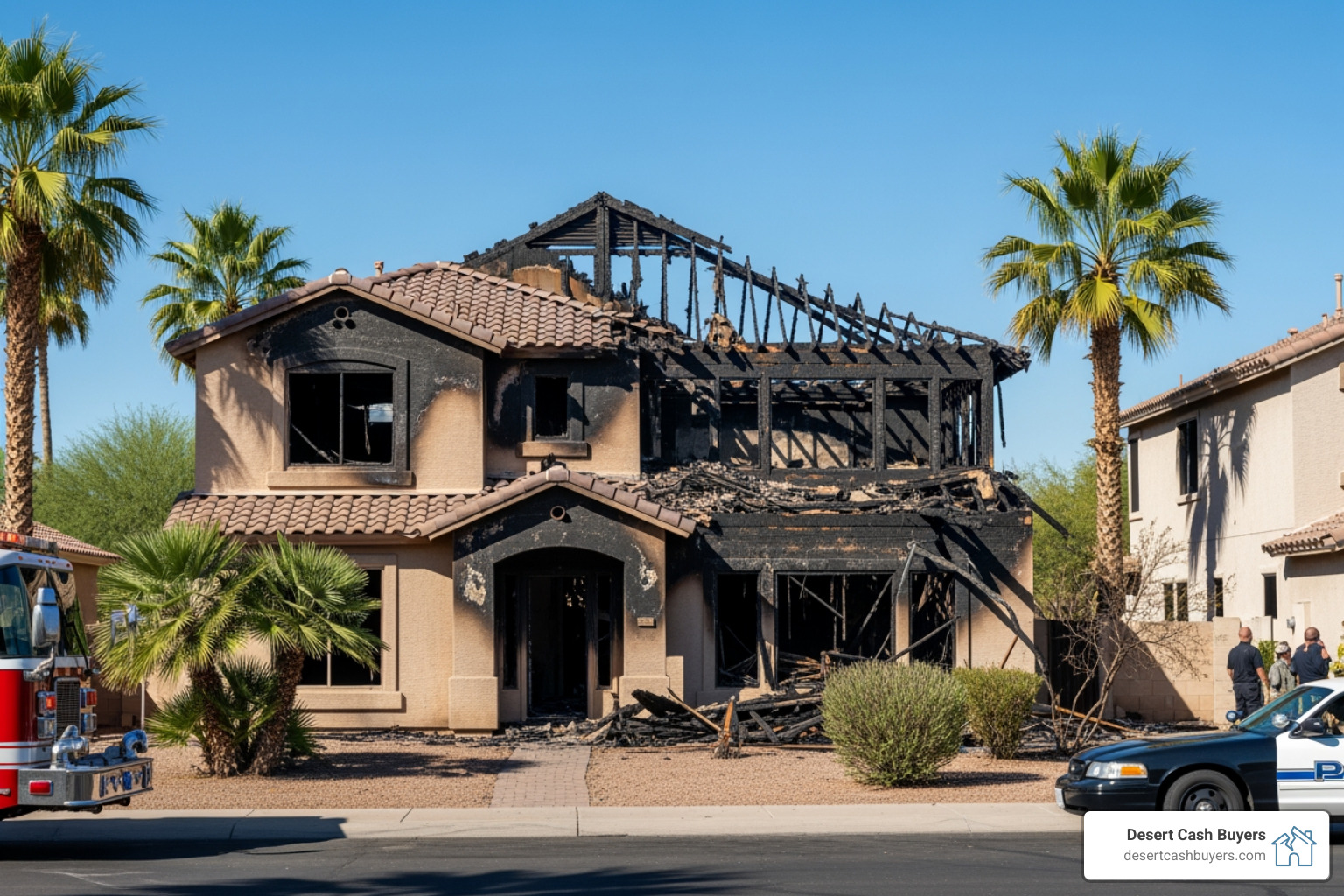
Repair Timeline:
Repairing your home in Phoenix or Scottsdale is a major time commitment, typically taking three to nine months or longer. Delays are common due to contractor availability and securing city permits for structural or electrical work. You’ll also need to manage the entire project, which can feel like a full-time job.
As-Is Sale Timeline:
In contrast, selling as-is is dramatically faster. At Desert Cash Buyers, we can close in as little as 3 to 21 days. This allows you to bypass the entire repair process, contractor headaches, and permit delays, so you can learn more about how it works with us.
Effort and Stress:
The effort to repair a fire-damaged home is immense. It includes:
- Damage Assessment: Getting detailed reports from restoration experts and structural engineers.
- Insurance Negotiations: Dealing with adjusters and documenting every loss.
- Contractor Vetting and Management: Finding reliable contractors and overseeing the work.
- Permitting: Navigating local city and county regulations.
- Displacement: Living in temporary housing for months.
Selling as-is eliminates these stressors. There are no repairs to manage or contractors to hire. We buy your property in its current condition, taking on all the responsibility for renovations, which allows you to focus on rebuilding your life, not your house.
Navigating Arizona’s Legal and Disclosure Requirements
Whether you repair or sell as-is, understanding Arizona’s legal disclosure requirements is paramount. Transparency is a legal obligation that protects you as the seller and builds trust with buyers.
In Arizona, sellers must disclose known material facts affecting the property’s value, including any fire damage. Even after full repairs, you must disclose the home’s fire history. Your disclosure should cover the cause and date of the fire, the extent of the damage, and the repairs made.
It should also include information on who completed the work, what permits were used, and any remaining issues. You must also provide details of any insurance claims made related to the fire. Failing to disclose can lead to lawsuits and financial penalties.
Buyers will conduct thorough inspections for structural integrity, smoke odor, and electrical issues. Undisclosed damage can cause the sale to fail or lead to legal action after closing. When you sell a fire-damaged house for cash, disclosure is still key, and you can learn more on our comparisons page.
We appreciate upfront honesty about the property’s condition. Providing fire department reports, insurance assessments, and damage reports helps us make a fair and accurate cash offer quickly. This transparency ensures a smooth transaction for everyone.

Frequently Asked Questions about Repair vs. Sell Fire Damaged House
Can I sell a fire-damaged house in Phoenix if the utilities are shut off?
Yes. In the Phoenix metro area, many cash buyers and investors will purchase fire-damaged homes even if water, power, or gas are disconnected. This is acceptable as long as they can safely inspect the property. Your buyer will typically account for utility reconnection costs in their offer.
How does a prior fire affect my home’s value in Scottsdale after repairs?
Even after full repairs in Scottsdale neighborhoods like McCormick Ranch or Old Town, a documented fire history can reduce your resale value slightly. Some buyers are cautious about a home’s history. Transparency, permits, and warranties on work completed can help minimize that discount.
Do I need to disclose smoke damage if I’ve already cleaned the house in Chandler?
Yes. Arizona law requires you to disclose all known material facts, including past smoke damage, even if remediation was done. Provide any reports from restoration companies so Chandler buyers and inspectors can see what was treated.
Are there local programs that help after a house fire in the Phoenix area?
Homeowners can often find short-term help through organizations like the American Red Cross and city-specific community services departments in Phoenix, Mesa, or Glendale. These programs usually focus on temporary housing and essentials. They do not typically pay for full home repairs.
How quickly do fire-damaged homes sell as-is around Tempe and Mesa?
As-is cash sales in Tempe, Mesa, and nearby cities commonly close in one to three weeks once you accept an offer. This is because there’s no lender underwriting or repair negotiations. Traditional listings with fire damage generally take longer and may involve multiple price reductions.
Repair vs Sell Fire Damaged House in Arizona: Final Takeaway
The decision to repair vs sell a fire damaged house in Arizona comes down to three things: damage severity, financial risk, and how quickly you need to move on. Repairs may make sense if the damage is limited and insurance fully covers the work. But when costs, timelines, or stress start to pile up, selling as-is is often the safer and simpler option.
Selling a fire-damaged house as-is lets you avoid repairs, contractor delays, and uncertainty—while giving you a fast, clean exit.
If you’re ready for a fast, stress-free solution, contact Desert Cash Buyers today for a fair, no-obligation cash offer and close on your timeline—no repairs or commissions needed.